Treating Sleep Apnea With a Dental Oral Appliance
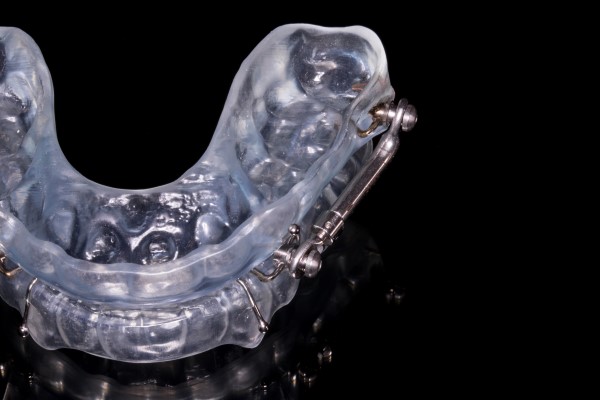
Patients with obstructive sleep apnea and snoring can wear oral appliances at night to sleep better. The devices look like sports mouthguards or orthodontic retainers. Oral appliance therapy entails choosing, designing, fitting and customizing an oral device to wear while sleeping. The oral appliance will help prevent the obstruction of the air passage caused by the collapse of the tongue and lower jaw into the back of the throat during sleep.
The effect of sleep disorders
Sleep disorders like sleep apnea can prevent a patient from getting restful sleep. If patients do not reach their restorative sleep cycles, they may feel exhausted during the day. Daytime fatigue, loss of concentration and depression are all symptoms of sleep disorders.
Obstructive sleep apnea is a sleep disorder where the air passage is blocked. This may result from the tongue collapsing into the back of the throat or a jaw misalignment that limits the size of the airway. Obstructions may lead to breathing difficulties and may restrict airflow to the point where breathing is impossible. This condition usually alters a person’s sleeping patterns and lifestyle. Sleep apnea has adverse effects on general wellbeing, and treatment should be sought immediately after diagnosis.
Oral appliance therapy
The dentist may recommend an oral appliance for patients with mild to moderate obstructive sleep apnea (OSA) over a CPAP (continuous positive airway pressure) device. For patients with severe cases of OSA who either fail to adequately respond to CPAP or are not eligible for CPAP, an oral appliance may be used as a standalone treatment or together with other treatment options. These options include weight management, surgery or CPAP. Oral appliances come in different forms and work by:
- Repositioning the tongue, soft tissues and lower jaw
- Stabilizing the tongue and lower jaw
- Retraining the tongue and improving its muscle tone
Getting a dental appliance
Oral appliances should be provided and fitted by a qualified dental professional who is experienced in sleep apnea treatments, is trained in general oral care and is familiar with the temporomandibular joint, dental occlusion and related structures. The dentist can help with a diagnosis, treatment and ongoing care of sleep apnea.
Oral device therapy can last for several weeks or several months. Once the desired result is achieved, the dentist may recommend a follow-up sleep study with the oral appliance in place to determine its efficiency. Over time, the dentist will continue to monitor the patient for improvements, compliance and to adjust the device as necessary. They will also check the condition of the oral structures and bite occlusion regularly to ensure everything is in order. Some of the benefits of oral appliance therapy include the following:
- Most patients adjust quickly to using oral appliances.
- It is an effective, non-invasive choice for patients who are non-compliant or cannot tolerate CPAP.
- It is easy to maintain.
- It is denture-friendly.
- It is discreet and offers quiet usage.
Follow-up note
For successful treatment of obstructive sleep apnea with oral appliances, patients need to take their dental appointments seriously. A follow-up care routine is important for the dentist to be able to monitor treatment progress. If you are considering a dental appliance for sleep apnea, book an appointment with the dentist.
Request an appointment here: https://www.beautifuldental.com or call Los Robles General & Cosmetic Dental Center at (805) 409-0999 for an appointment in our Thousand Oaks office.
Check out what others are saying about our dental services on Yelp: sleep Apnea in Thousand Oaks, CA.
Related Posts
Many individuals ask cosmetic dentists whether at-home whitening can deliver noticeable results for their smile. While the answer is yes under certain conditions, effectiveness depends on the method used, the type of stain, and the consistency of treatment. Not all over-the-counter choices provide the same level of safety, comfort, or long-term success when you want…
Understanding the core distinctions between a full mouth reconstruction and a standard smile makeover also helps individuals see how general dentists select the most appropriate dental procedure for their unique oral health needs. While both services significantly enhance your smile, the underlying clinical goals remain entirely distinct. Our dentist evaluates patients to determine whether they…
A general dentist knows that a healthy smile starts with good habits at home. Many people ask about the best way to floss to keep their teeth. While the task seems simple, using the proper technique ensures the mouth stays free of disease. Most individuals understand that a brush alone cannot reach every surface.Plaque forms…
A loose dental crown can make chewing feel awkward and leave the tooth underneath more exposed to damage. Because a dental crown covers and protects a weakened or treated tooth, it is important to address movement as soon as possible. Even if the crown has not fallen off, a loose fit may allow bacteria, food…